Isuzu Parts Guide
Isuzu D-Max Brake Master Cylinder 8-98320670-0: Port Check and Workshop Handoff Guide
A practical buyer and workshop checklist for confirming the Isuzu D-Max brake master cylinder 8-98320670-0, ABS MT specification, and 12 mm brake pipe port before installation.
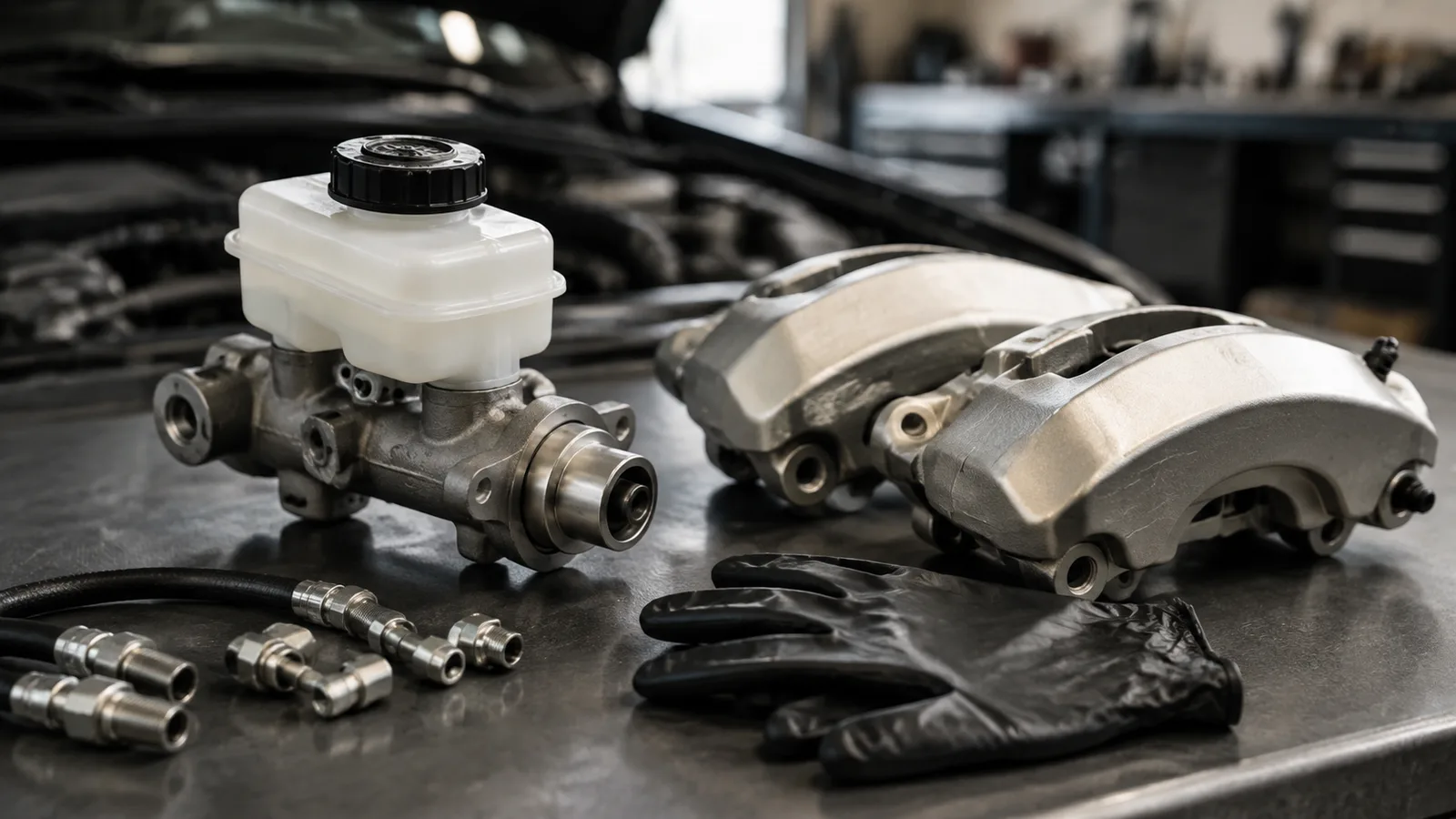
A brake master cylinder is a safety-related hydraulic component, so the buying process should be careful and documented. This guide is for customers reviewing the Genuine Isuzu D-Max Brake Master Cylinder listed with OEM number 8-98320670-0 / 8983206700, described for ABS vehicles with manual transmission and a 12 mm brake pipe port. It is not a substitute for a mechanic's inspection or official parts lookup. Instead, it gives buyers and workshops a simple way to compare the listing, the vehicle, and the removed part before installation work begins. Confirm the specification before ordering Start with the part number, then check the application details around it. The listing refers to Isuzu D-Max model years 2012-2019, ABS, manual transmission, and the large 12 mm brake pipe port version. These details matter because brake hydraulic parts may look similar while using different pipe ports, reservoir arrangements, mounting faces, or sensor provisions. Ask the workshop to confirm the vehicle using its normal lookup process and, when possible, compare the removed unit before the final order decision. Write the number exactly as shown: 8-98320670-0 / 8983206700. Keep a photo of any number on the old cylinder, packaging, or workshop reference. Do not rely only on a short marketplace title or a single angle of a photo. Build a useful photo comparison set Before removal, photograph the brake master cylinder in the engine bay from several angles. Include the pipe connections, reservoir area, mounting flange, pushrod side if visible, and any nearby ABS-related layout details the mechanic considers important. After removal, place the old unit on a clean bench and photograph it beside a ruler or caliper. The goal is not to diagnose the brake system from pictures; the goal is to make sure the replacement being ordered matches the part the workshop expects to install. For the 12 mm pipe port detail, ask the mechanic to confirm the port measurement rather than estimating from a photo. A clean note such as 'ABS MT, 12 mm port confirmed by workshop' is more useful than several vague messages. Inspect the parcel before workshop fitting When the part arrives, check the outer packaging for crushing or moisture. Photograph the label, the part number, and the component before removing protective caps. Compare the casting shape, port positions, mounting ears, reservoir interface, and any included fittings against the old part. Keep protective plugs in place until the workshop is ready, because cleanliness is important for hydraulic components. If anything does not match, pause before installation. Do not force pipe alignment, modify ports, or assume a small difference is harmless. Contact the seller or parts specialist with clear photos and the original order details. Prepare a clean handoff for the mechanic A concise handoff reduces confusion at the workshop counter. Include the product URL, the exact part number, vehicle model details, transmission type, ABS confirmation, port confirmation, and arrival photos. Ask the mechanic to follow proper brake-system service procedures, including clean handling, correct fluid practices, bleeding, and safety checks according to the vehicle service information. After installation, keep the invoice, photos, and notes with the vehicle records. If future brake service is needed, that documentation helps the next technician understand which version was fitted and why it was selected.