Isuzu Parts Guide
Before Installation: Identify Isuzu D-Max Master Cylinder 8-98320670-0
Confirm the OEM number, ABS manual-transmission application, and 12 mm brake pipe port before installing this Isuzu D-Max brake master cylinder.
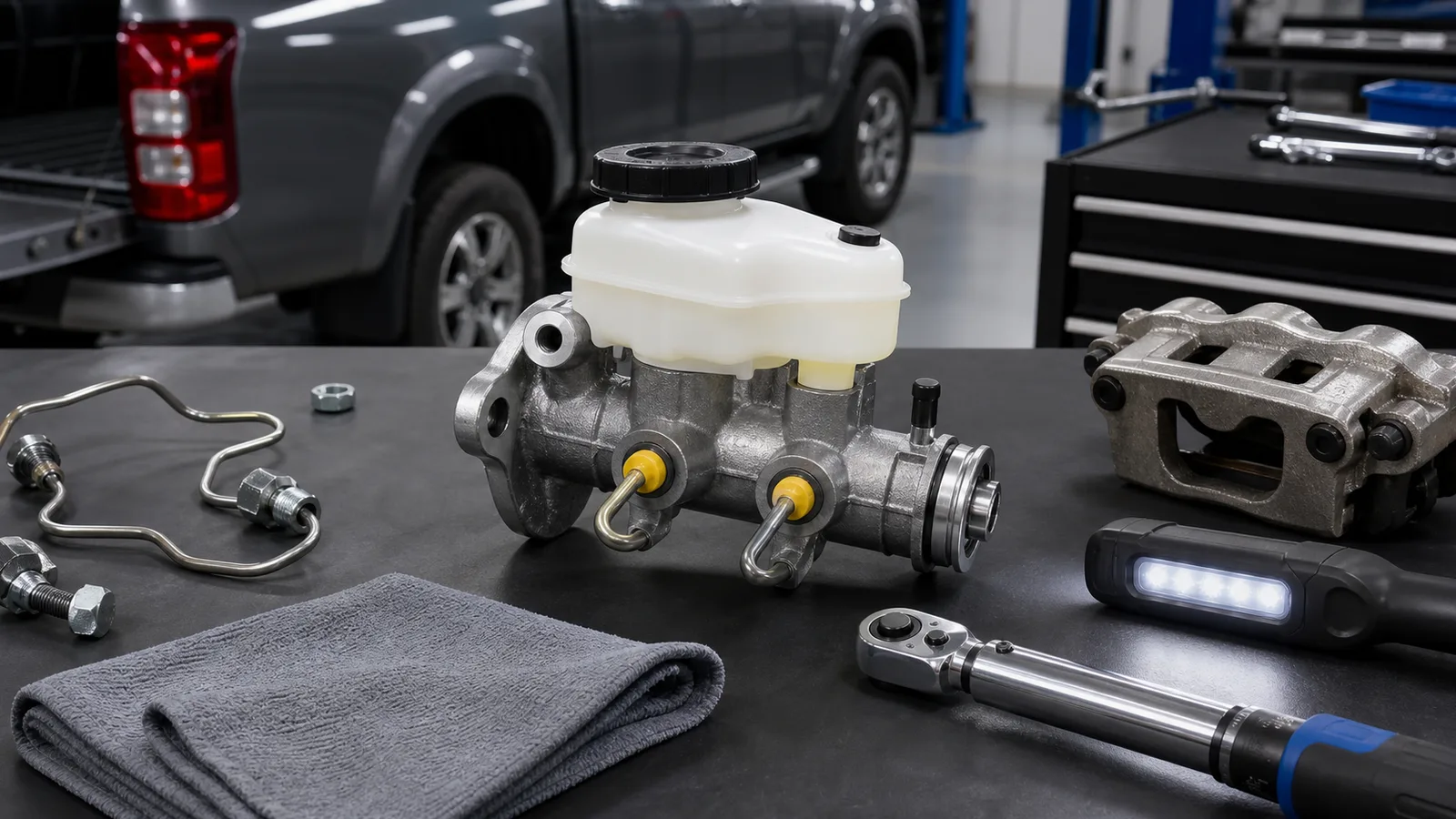
A brake master cylinder should be identified carefully before installation because small application differences can affect brake pipe routing, port size, and hydraulic service procedure. This listing is for a Genuine Isuzu D-Max brake master cylinder for 2012–2019 applications with ABS and manual transmission, identified by OEM number 8-98320670-0 / 8983206700 and a 12 mm brake pipe port version. Use those details as checkpoints, not as a substitute for vehicle-specific confirmation. Confirm the vehicle and part number first Start by recording the vehicle model year, transmission type, ABS configuration, and VIN. The product name points to D-Max, ABS, manual transmission, and the large 12 mm pipe port. A similar D-Max master cylinder from another configuration may look close in photos but can still differ at the hydraulic connections. If the old unit is still available, compare the casting shape, mounting flange, reservoir interface, pushrod area, outlet positions, and any visible markings before ordering or fitting the replacement. The OEM reference 8-98320670-0 / 8983206700 is the strongest product identifier in this listing. Write it down exactly, including the hyphenated and non-hyphenated versions, then compare it with workshop records, the removed component, or a qualified parts lookup. Do not assume that a part with the same general description has the same brake pipe port. The stated 12 mm pipe port should be checked directly against the vehicle's brake line fittings before the part is installed. Inspect the hydraulic connections Before fitting a brake master cylinder, inspect the brake lines that connect to it. Look for damaged flare nuts, cross-threading, corrosion, or signs that a previous repair used the wrong fitting. The replacement part should not be forced onto a line that does not start by hand. If the fitting angle, thread engagement, or seating feel is not correct, stop and recheck the application. Forcing a hydraulic fitting can damage both the line and the new component. Also inspect the reservoir area, seals, mounting studs, and the brake booster contact surface. Clean mounting faces and correct alignment help the part sit squarely. Follow the vehicle service manual for fluid type, bleeding order, tightening values, and any ABS-related procedure. Some systems require specific steps to remove air from the hydraulic circuit, and those steps should be handled by a qualified technician with suitable equipment. Plan installation and final checks Bench bleeding may be required before installation, depending on the workshop procedure. Prepare clean brake fluid of the specified type, protect painted surfaces, and keep all openings capped until connection. After installation, the brake pedal feel, leak check, fluid level, warning lamps, and roadworthiness checks should be verified according to the service manual. This article is a buyer and identification guide only; brake system work should be completed by trained personnel. If the vehicle data, OEM number, ABS/manual transmission configuration, and 12 mm pipe port all match, this product can be evaluated as a candidate replacement for the listed application. If any detail conflicts, pause before purchase and request confirmation with photos of the existing part and vehicle information.