Ford Parts Guide
Ford Ranger 2.0 Transmission Oil Cooler: Line and O-Ring Inspection Guide
Check the stated application, cooler connections, lines, and O-ring details before choosing this Ford Ranger 2.0 transmission oil cooler.
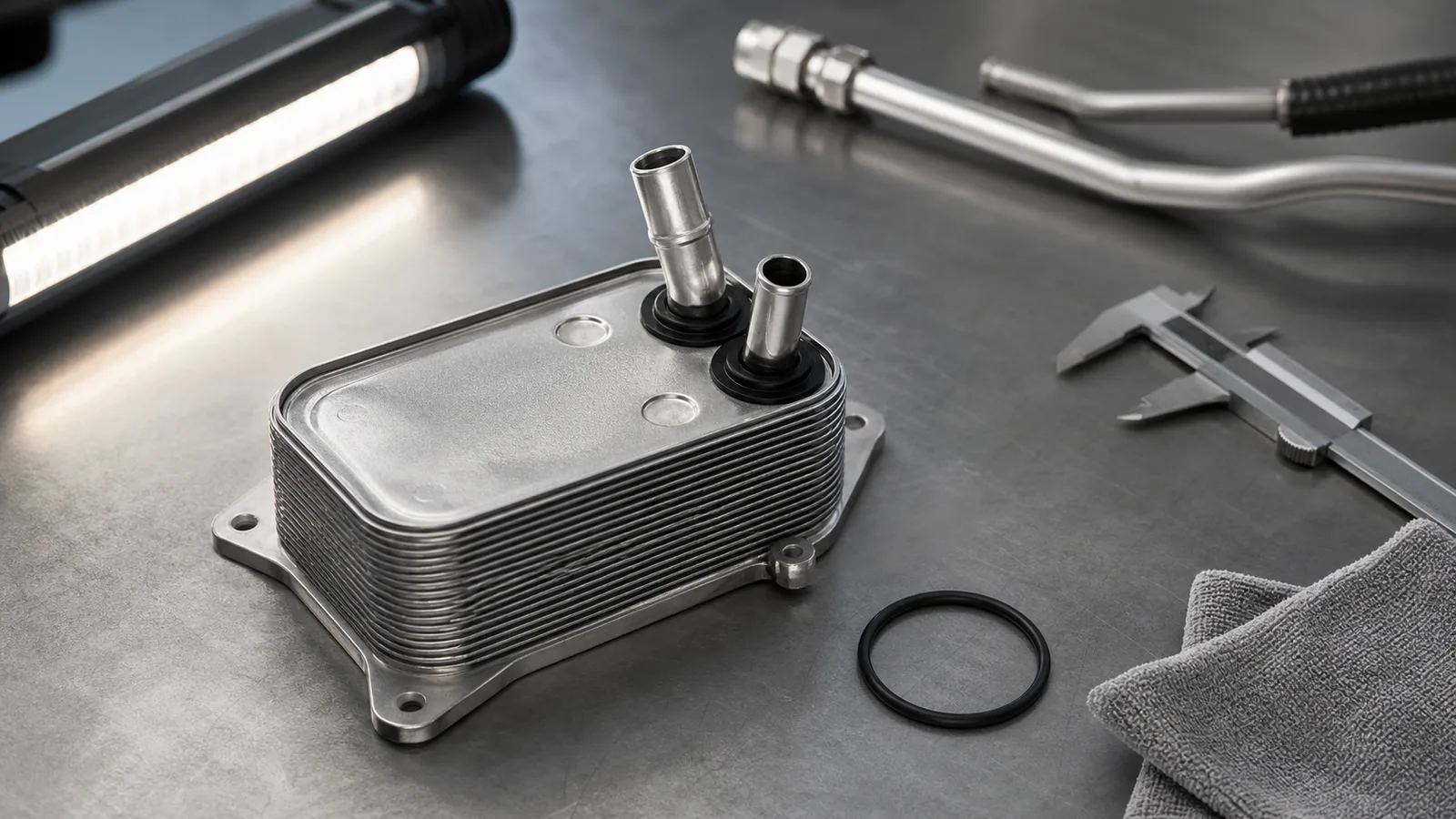
An automatic transmission oil cooler is part of a connected fluid circuit, so buying the cooler alone should follow a careful inspection of the vehicle, the existing part, and the surrounding lines. This product is named for the Ford Ranger 2.0 automatic transmission for model years 2018–2022 and is listed with an O-ring. Those details provide a useful starting point, but they should not replace vehicle-specific confirmation. Before ordering, identify the exact application and determine whether the cooler, a connection, a line, or a seal is the likely source of the problem. Start with the stated application Record the vehicle model, engine designation, model year, transmission type, and VIN. The listing states Ford Ranger 2.0, automatic transmission, and 2018–2022. Treat every part of that description as a checkpoint. A similar-looking Ranger component, a nearby production year, or a different transmission configuration should not be assumed compatible. If a workshop or parts adviser is helping, provide the complete vehicle information and ask them to compare it with the listing before purchase. Next, inspect the removed part or the installed assembly where access is safe. Compare its overall shape, mounting points, connection positions, and the routing around it with the product images. Do not rely on color or a single visual feature. If the old part has a readable engineering or service number, record it accurately and use it as another reference when confirming the application. The product data does not provide an MPN, so confirmation should be based on the stated application, clear visual comparison, and qualified parts guidance rather than an inferred part number. Inspect the cooler lines and connections Fluid near the cooler does not automatically prove that the cooler body has failed. Before removal, note where residue begins and how it travels. Check each cooler line for rubbing, sharp bends, corrosion, impact marks, damp sections, or damage close to a connection. Look at clips, brackets, and routing points that keep a line away from moving or hot components. A loose support or damaged line may need attention even if the cooler is also being replaced. Examine the connection areas on the existing cooler. Residue concentrated around a joint can indicate that the sealing interface deserves closer inspection, while staining across the cooler surface may call for a different diagnosis. Clean only as appropriate for inspection and follow workshop procedures; transmission fluid circuits require controlled handling. A technician can distinguish fresh leakage from old residue and check whether a fitting, line end, or cooler surface is involved. Confirm the O-ring requirements The product name and description state that an O-ring is included. Review the product images to understand what is shown, then confirm how many sealing points the vehicle repair requires. Do not assume one included O-ring covers every connection in the job. Additional seals, clips, fittings, or line components may be separate items, depending on what inspection finds. Before installation, the receiving groove and mating surface should be checked for scratches, corrosion, embedded debris, or deformation. The new O-ring should match the intended connection and should not be substituted based only on a roughly similar diameter. Seal preparation, lubrication, fitting engagement, and tightening procedures should follow the relevant service information. An O-ring that is twisted, pinched, contaminated, or installed against a damaged surface may not seal correctly. Use a pre-purchase evidence checklist Capture the VIN, model year, engine designation, and automatic transmission details. Confirm that the requested application is Ford Ranger 2.0 within the stated 2018–2022 range. Photograph the existing cooler from several angles before removal. Compare mounting points, body shape, and connection locations with the listing images. Trace both cooler lines and inspect their supports, bends, and connection ends. Identify whether residue starts at the cooler body, a fitting, a line, or a sealing point. Confirm which O-ring is included and whether the repair needs any additional seals or hardware. Ask a qualified technician or parts adviser to resolve any mismatch before ordering. Plan the repair as a system A replacement decision should include the condition of the fluid circuit around the cooler. Ask the installer whether damaged lines, clips, or mating surfaces would prevent a reliable repair. Installation may also require the correct transmission-fluid procedure, cleanliness controls, leak checks, and verification after the system reaches the specified operating conditions. These are service decisions, not details to improvise from the product name. For product photos and the current listing details, review the Genuine Ford Ranger 2.0 automatic transmission oil cooler with O-ring . Use the page as one part of the evidence set, alongside the vehicle record, existing-part inspection, and professional application check. If any connection, mounting point, or application detail remains uncertain, pause the purchase until it is resolved.